
Why Choose Us?
Strict Quality Control
Excellent quality assurance personnel, professional technical personnel, coupled with strict management system so that the company's product quality has been maintained a good record.
Professional Technical Team
The introduction of advanced technical equipment and management concepts, with experienced professional design team and technical personnel, to establish a complete set of product quality management system.
Wide Range of Applications
For advertisement in any shops, Such as restaurants, dressing shops,bars,clubs,theater, museum, book shop,supermarket,special store,hairdressers,commercial centers, night market etc. Wirte on galss,boards and so on.
Reliable Customer Support
Our team provides reliable customer support, and we take pride in our prompt response and resolution time. We value our clients, and we are always available to assist them with any queries or concerns they may have.
What is Empty Marker?
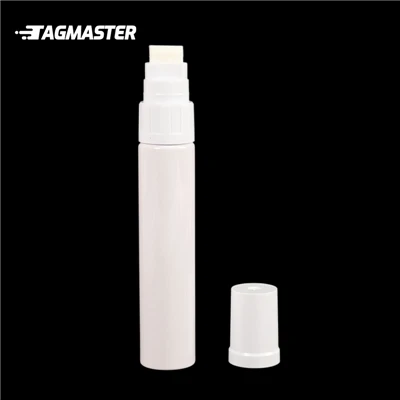
Empty Markers allow artists to customize their marker by flig the with the paint or ink of choice. You can also mix colors together to create custom colors to your taste. Many feature a special pump system for optimum flow control, and come in a variety of nib sizes.
What is Refil Ink?
Refill ink is used to keep the life of your self inking stamps, pre inked stamps, daters and rubber stamp pads going. Use the ink to revive your current stamp pad and keep stamping without having to order a brand new stamp. It's an easy way to get more mileage out of your investment and ensure that you're always able to make the perfect impression.
-
![50mm Jumbo Empty Paint Marker Pens 30ml Refillable Wide Block Barrel]() 50mm Jumbo Empty Paint Marker Pens 30ml Refillable Wide B...Industrial-grade 50mm jumbo empty paint marker pens with 30ml capacity barrels and high-flow felt block nibs. Designed for massive street artwork, graffiti calligraphy, broad signage, and heavy-duty industrial mark-making. Available inread more
50mm Jumbo Empty Paint Marker Pens 30ml Refillable Wide B...Industrial-grade 50mm jumbo empty paint marker pens with 30ml capacity barrels and high-flow felt block nibs. Designed for massive street artwork, graffiti calligraphy, broad signage, and heavy-duty industrial mark-making. Available inread more -
![Empty Aluminum Paint Marker Pens 4.5mm & 16mm Refillable Barrel]() Empty Aluminum Paint Marker Pens 4.5mm & 16mm Refillable ...Heavy-duty wholesale empty aluminum paint marker barrels with 4.5mm and 16mm pump-action nibs. Engineered with leak-proof aluminum tubes and high-precision valve mechanisms, these refillable blank markers are perfect for solvent-basedread more
Empty Aluminum Paint Marker Pens 4.5mm & 16mm Refillable ...Heavy-duty wholesale empty aluminum paint marker barrels with 4.5mm and 16mm pump-action nibs. Engineered with leak-proof aluminum tubes and high-precision valve mechanisms, these refillable blank markers are perfect for solvent-basedread more -
![8MM Capsule Refillable Empty Paint Marker]() 8MM Capsule Refillable Empty Paint MarkerPocket-sized 10ml refillable empty paint marker with an 8mm round bullet nib. Features a translucent capsule barrel, mixing ball, and leak-proof pump valve. Ideal for acrylics, custom inks, street art, and OEM bulk wholesale.read more
8MM Capsule Refillable Empty Paint MarkerPocket-sized 10ml refillable empty paint marker with an 8mm round bullet nib. Features a translucent capsule barrel, mixing ball, and leak-proof pump valve. Ideal for acrylics, custom inks, street art, and OEM bulk wholesale.read more -
![50ml Empty Squeeze Bottle With Sponge Tip]() 50ml Empty Squeeze Bottle With Sponge Tip50ml empty squeeze bottle with sponge tip for graffiti mop markers, DIY daubers, painting and ink refilling. Translucent plastic body.Use this squeeze bottle to paint flat surfaces of painting, including wooden boards, plastic boards,read more
50ml Empty Squeeze Bottle With Sponge Tip50ml empty squeeze bottle with sponge tip for graffiti mop markers, DIY daubers, painting and ink refilling. Translucent plastic body.Use this squeeze bottle to paint flat surfaces of painting, including wooden boards, plastic boards,read more -
![8mm Acrylic Tip Empty Marker Capsule Pen AP-D1908 10ml Refillable Marker]() 8mm Acrylic Tip Empty Marker Capsule Pen AP-D1908 10ml Re...The AP-D1908 8mm Acrylic Tip Empty Marker Capsule Pen is a refillable marker system designed for graffiti, illustration, labeling, and general marking applications.This model uses an acrylic fiber tip structure (8mm round tip), providing$ 0.50 read more
8mm Acrylic Tip Empty Marker Capsule Pen AP-D1908 10ml Re...The AP-D1908 8mm Acrylic Tip Empty Marker Capsule Pen is a refillable marker system designed for graffiti, illustration, labeling, and general marking applications.This model uses an acrylic fiber tip structure (8mm round tip), providing$ 0.50 read more -
![10mm Refillable Marker Barrel White Chisel Felt Nylon Series]() 10mm Refillable Marker Barrel White Chisel Felt Nylon SeriesThe 10mm Refillable Marker Barrel White Black Series is designed for medium-width marker applications that require stable ink output and flexible nib compatibility.This series includes both transparent and black barrel structures,$ 0.48 read more
10mm Refillable Marker Barrel White Chisel Felt Nylon SeriesThe 10mm Refillable Marker Barrel White Black Series is designed for medium-width marker applications that require stable ink output and flexible nib compatibility.This series includes both transparent and black barrel structures,$ 0.48 read more -
![Fine Tip Empty Graffiti And Art Marker]() Fine Tip Empty Graffiti And Art MarkerPremium 0.7mm fine point empty refillable marker for graffiti handstyles, illustration, and art design.. Leak-proof blank pen barrel compatible with fluid acrylics, liquid chalk, and creative stationery inks.$ 0.20 read more
Fine Tip Empty Graffiti And Art MarkerPremium 0.7mm fine point empty refillable marker for graffiti handstyles, illustration, and art design.. Leak-proof blank pen barrel compatible with fluid acrylics, liquid chalk, and creative stationery inks.$ 0.20 read more -
![30mm Empty Marker Barrel]() 30mm Empty Marker BarrelThe 30mm Empty Marker Barrel is made for marker products that need extra-wide coverage and strong ink output. It is suitable for applications such as wall painting,graffiti,billboard work,warehouse marking and other large-surface writing$ 1.00 read more
30mm Empty Marker BarrelThe 30mm Empty Marker Barrel is made for marker products that need extra-wide coverage and strong ink output. It is suitable for applications such as wall painting,graffiti,billboard work,warehouse marking and other large-surface writing$ 1.00 read more -
![15mm Refillable Marker Barrel]() 15mm Refillable Marker BarrelThe 15mm Refillable Marker Barrel is designed for marker products that require strong coverage and wide strokes. In many graffiti projects, wall paintings and industrial marking tasks, artists or workers often need a marker that can$ 1.00 read more
15mm Refillable Marker BarrelThe 15mm Refillable Marker Barrel is designed for marker products that require strong coverage and wide strokes. In many graffiti projects, wall paintings and industrial marking tasks, artists or workers often need a marker that can$ 1.00 read more -
![50mm Wide Empty Paint Marker For Large Surface Industrial Marking]() 50mm Wide Empty Paint Marker For Large Surface Industrial...Extra-wide 50mm flat tip empty marker designed for bold surface coverage and industrial applications.read more
50mm Wide Empty Paint Marker For Large Surface Industrial...Extra-wide 50mm flat tip empty marker designed for bold surface coverage and industrial applications.read more -
![0.5mm Needle Tip Empty Marker Pen For Precision Industrial Marking]() 0.5mm Needle Tip Empty Marker Pen For Precision Industria...Fine metal needle tip empty marker body designed for precision oil-based or alcohol ink systemsread more
0.5mm Needle Tip Empty Marker Pen For Precision Industria...Fine metal needle tip empty marker body designed for precision oil-based or alcohol ink systemsread more -
![15mm Flat Tip Empty Paint Marker For Acrylic Ink OEM Supply]() 15mm Flat Tip Empty Paint Marker For Acrylic Ink OEM SupplyProfessional 15mm empty paint marker body with 30g capacity, designed for acrylic ink brands and bulk wholesale supply.read more
15mm Flat Tip Empty Paint Marker For Acrylic Ink OEM SupplyProfessional 15mm empty paint marker body with 30g capacity, designed for acrylic ink brands and bulk wholesale supply.read more


Advantages of Empty Marker
Environmentally-Friendly
Empty markers are certainly extremely beneficial to the environment. The good news is that more and more regular people just like you and me are finding this to be true. By constantly disposing of old markers, the vast amount of garbage will exponentially increase. Gel pen and ink refills allow you to use your favorite marker over and over again without being constrained to throw it away. Since most disposable markers available on the market are built from plastic, marker refills translate into a decrease of the quantity of non-biodegradable plastic in the landfills.
Cost Effective
Another huge advantage of using empty markers for your pen is huge savings in the long run, especially if you are keen on buying only top-quality markers which are certainly way more expensive than regular pens. The hassle and the cost involved with finding specialist pens is greater than it is with buying cartridges, as most brands available on the market create their own markers which can fit only certain types of cartridges.
Moreover, in case you lose your marker, you will still have the cartridges which can be used to refill the next pen you will purchase.
Save Time
Let's say you use a marker on a regular basis and you desperately need it to write down something. However, the marker runs out of ink in that very moment you need it more than ever. Instead of panicking, you just refill it in less than 30 seconds and continue your work. Just imagine what would have happened if you would not have had a cartridge at hand. You managed to stay on top of this situation without resorting to “unorthodox methods”.
What Are the Main Components of the Ink in the Empty Marker?
Pigment
Including pigments and dyes. Pigments are divided into organic pigments and inorganic pigments. The former has bright color and strong coloring power, and is widely used in inks, such as azo and phthalocyanine pigments; the latter has light resistance, heat resistance, and solvent resistance , The hiding power is better, such as titanium white, cadmium red, chrome green, ultramarine blue and so on. Pigments are colored in the form of particles and do not dissolve. They are the most commonly used colorants in inks. While the dye is formulated into a solution when in use, it is colored in a molecular state, and the effect is not as good as that of a pigment. The pigment can give the ink different colors and color density, and make the ink have a certain viscosity and dryness.
Connecting materials
It is also one of the main components of ink, which acts as a medium for dispersing pigments and auxiliary materials. It is made by dissolving a small amount of natural resin, synthetic resin, cellulose, rubber derivatives, etc. in dry oil or solvent. It has certain fluidity, so that the ink forms a uniform thin layer after printing, and forms a film with a certain strength after drying. It also protects the pigment and makes it difficult to fall off.
The binder has a great influence on the transferability, brightness, fixing speed and other printing suitability and printing effect of the ink. Therefore, choosing the right binder is one of the keys to ensure good printing. It should be based on packaging materials, printing requirements, etc. Different, adjust the composition and ratio of the binder at any time.
Auxiliary Components of Refil Ink
There are many auxiliary components of refil ink, mainly as follows:
Filler
It is an additive to adjust the ink concentration, and it can also increase the thickness of the ink film and improve its wear resistance. It has no tinting power and hiding power. Mainly include barium sulfate, calcium carbonate, aluminum hydroxide, etc., which are crushed into white powder when used.
Thinner
Its function is to reduce the viscosity of the ink, prevent the phenomenon of film peeling, and make the ink workable. Commonly used diluents are oligomerized linseed oil and mineral oil. The former is easy to mix with ink and has a soft effect; the latter has obvious dilution effect, but avoid excessive printing, otherwise the printing effect will be bad.
Anti-skinning agent
Its function is to inhibit the drying speed of the ink and prevent the ink from drying and conjunctivating mechanically. Its main ingredients are organic reducing agents and antioxidants. It can be added to the ink, or it can be spread on the machine in contact with the ink.
Anti-reverse printing agent
Its function is to prevent the printing ink layer from being reversed to the back of the paper to ensure printing quality. The most commonly used anti-offset agent is corn starch.
Slip agent
Its function is to improve the friction resistance and fluidity of the ink, reduce the viscosity, improve the smoothness of the film, and reduce the phenomenon of paper fuzzing. Commonly used slip agents in inks include high melting point microcrystalline wax and synthetic wax.
Other additives
There are many other additives, such as dispersing agents, wetting agents, desiccants, and stabilizers.
Application of Empty Marker

01.Crafts
02.Advertisement
03.Outdoor Party Signs
04.Label and Tags
05.Erasable Calendar
06. Teaching and Learning
Tips for Filling the Empty Markers
The nib screws off in the opposite direction to most things in life. This is to prevent it unscrewing if you try to unscrew the lid as the ink would go everywhere.
Do not lose the ball from inside, it is needed for agitation.
This can be ink, acrylic ink, watered-down acrylic paint or another experiment.
Golden High-Flow Colours are particularly well suited to the empty markers – they are the right consistency and come in some beautiful very strong colours. Golden High Flow colours are just as strong as the Golden Heavy Body colours, they are not heavy body thinned with water to be weaker.
Filling can be a bit messy, though not always. To make it easier Montana have empty squeeze bottles to fill with the ink or watered paint and then fill the empty pens.
Take care to fill over scrap paper or absorbent paper in case you dribble.
Then pump the nib on a piece of spare paper until the colour saturates the nib.
The nib remains soft enough to absorb the colour from the pen body for many weeks. I have had some dry out after a few months of sitting and they are too hard to absorb the fluid – when pumping it just leaks around the edges a bit but doesn’t draw properly. I have also had some that are perfectly soft after 8 months. I am not sure what the difference has been, possibly a wetter mix of colour in the pen body or a better fitting cap.
When the pen is first filled the felt nib is dry. The operation of the pen is based on the valve which seals the barrel opening. When the nib presses inward on the center of the valve, an element of the valve is pushed away from slots in the side of the valve, allowing paint to flow from the barrel into the nib, where it is wicked from the base to the painting tip.
To use your pen for the first time, hold it against a piece of scrap paper at a 45 degree angle and press the tip firmly into the pen. You may need to hold it there for a minute or two the first time the nib is used to achieve saturation of the nib with paint.
From that point on, use the paint pen as you would a marker, and when you notice the tip of the nib getting dry, or the paint flowing poorly, press in on the nib for a moment to allow more paint to flow into the nib. You will very quickly get the hang of this and in no time will be painting like an old pro.

Steps on How to Refill Ink Cartridges
To save money and effort, many users tend to refill their own inkjet cartridges instead of buying a new one. Refill kits are available online and at the nearest office supply store. The kit usually comes with syringes, drill bits, plastic stoppers, and the ink inside the vials. If you are a do-it-yourself guy, and you want to know the steps of refilling ink in the cartridges, just follow the instructions below:
The first thing to do is to remove the cartridge from the printer. It should be noted that most printers have a black and color cartridges.
Make a hole in your cartridge using the drill bits that were being provided in the refill kit. The hole is usually found on the top side of many inkjet cartridges and is covered with a label. Remove the label and make the hole using the drill bits.
Using the syringes, take the ink from the vial and carefully inject it into the cartridge until it is full.
After injecting, cover the hole with plastic stoppers that are available in the kit or a tape as another option. After, you can put the cartridge back to the printer.
The final step is to clean your printer head using a cloth. A clean printer head leaves a neat rectangular mark when you clean it. To be sure, print a test page to check the cleanliness of your printer head.
Empty markers require you to shake the marker for at least 30 seconds with the lid attached and pump the nib until it fills with ink to start working. Firmly press the tip of the marker on a surface and then release. You will continue this action until you see the ink on the tip of the marker.The color of the chalk marker you use will look somewhat different on different surfaces. It's good to do a spot test on the surface you are using before starting your project. You can do this by drawing a small line or dot close to the edge where it won't be seen. This tactic will help you see how the color is going to look. When you are ready to draw, you should hold the marker at an angle to the surface to ensure the ink flows easily. Like with any project, it's best to begin with the broad strokes and then fill in the details.
How Do I Maintain and Care for My New Empty Marker?
Your marker is manufactured to last for many, many years. But did you know that regular maintenance can help extend your marker’s “like new” look for decades to come? Here are a few helpful tips to get you started.
Carefully planned placement of your marker
Markers last much longer when they are placed in a location that minimizes the impact of the elements. Take into consideration the proximity of your planned location to roads, passing snowplows, trees, utility poles, water, etc.
Marker pole preparation
We recommend using a piece of poly plastic between the connecting surfaces of the pole and marker. This is a simple yet effective way of keeping the surfaces from corroding together and making removal of the marker from the pole much easier if ever needed. An oversized piece of plastic can be cut, then draped over the top of the pole, and temporarily taped in place while the marker is set on the pole. Once the screws of the mount have been tightened, carefully trim off the excess plastic at the base of the marker, making sure not to cut into the coating on the pole.
Annual cleaning
Cleaning your marker once a year with a mild mix of soap and water will extend the life of your marker. In doing so, you are removing a layer of road salt, dust, pollen, tree sap and other contaminants that will eventually degrade your marker’s coating. You may have to clean your marker more frequently if it is exposed to extreme conditions. Non-metal brushes or cloth are recommended for cleaning.
Certifications


Our Factory
Shenzhen ample Technology Co Ltd is in Shenzhen Guangdong province, where It is located in South China bordering on Hong Kong. It is one of China's first special economic zones. It has an economy featuring high-tech industries. At present, the company has more than 100 employees, the factory area of more than 2000 square meters. Produce Machines more than 15sets,Our Company to provide professional services for the purpose, regardless of the production process, quality, customer sales and after-sales service, etc.


Ultimate FAQ Guide to Empty Marker And Refil Ink
Professional as one of leading empty marker and refil ink manufacturers and suppliers in China, we also support customized service. Please rest assured to buy empty marker and refil ink from our factory.
empty fiber tip marker, refill for empty fine tip markers, non toxic marker ink refill-
![50mm Jumbo Empty Paint Marker Pens 30ml Refillable Wide Block Barrel]() 50mm Jumbo Empty Paint Marker Pens 30ml Refillable Wide Block BarrelIndustrial-grade 50mm jumbo empty paint marker pens with 30ml capacity barrels and high-flow felt block nibs. Designedread more
50mm Jumbo Empty Paint Marker Pens 30ml Refillable Wide Block BarrelIndustrial-grade 50mm jumbo empty paint marker pens with 30ml capacity barrels and high-flow felt block nibs. Designedread more -
![Empty Aluminum Paint Marker Pens 4.5mm & 16mm Refillable Barrel]() Empty Aluminum Paint Marker Pens 4.5mm & 16mm Refillable BarrelHeavy-duty wholesale empty aluminum paint marker barrels with 4.5mm and 16mm pump-action nibs. Engineered withread more
Empty Aluminum Paint Marker Pens 4.5mm & 16mm Refillable BarrelHeavy-duty wholesale empty aluminum paint marker barrels with 4.5mm and 16mm pump-action nibs. Engineered withread more -
![8MM Capsule Refillable Empty Paint Marker]() 8MM Capsule Refillable Empty Paint MarkerPocket-sized 10ml refillable empty paint marker with an 8mm round bullet nib. Features a translucent capsule barrel,read more
8MM Capsule Refillable Empty Paint MarkerPocket-sized 10ml refillable empty paint marker with an 8mm round bullet nib. Features a translucent capsule barrel,read more -
![50ml Empty Squeeze Bottle With Sponge Tip]() 50ml Empty Squeeze Bottle With Sponge Tip50ml empty squeeze bottle with sponge tip for graffiti mop markers, DIY daubers, painting and ink refilling.read more
50ml Empty Squeeze Bottle With Sponge Tip50ml empty squeeze bottle with sponge tip for graffiti mop markers, DIY daubers, painting and ink refilling.read more -
![Squeeze Bottle 50ml 18mm Empty Ink Bottle]() Squeeze Bottle 50ml 18mm Empty Ink Bottle50ml wide-base squeeze paint bottle No.2 with 18mm dabber tip. Features a stable grip design in soft & hard bodyread more
Squeeze Bottle 50ml 18mm Empty Ink Bottle50ml wide-base squeeze paint bottle No.2 with 18mm dabber tip. Features a stable grip design in soft & hard bodyread more -
![No.1 Empty Squeeze Bottle 50ml 18mm]() No.1 Empty Squeeze Bottle 50ml 18mmThe No.1 Squeeze Bottle is designed for users who need a durable refill bottle for inks, paints and other liquidread more
No.1 Empty Squeeze Bottle 50ml 18mmThe No.1 Squeeze Bottle is designed for users who need a durable refill bottle for inks, paints and other liquidread more