
Why Choose Us?
Strict Quality Control
Excellent quality assurance personnel, professional technical personnel, coupled with strict management system so that the company's product quality has been maintained a good record.
Professional Technical Team
The introduction of advanced technical equipment and management concepts, with experienced professional design team and technical personnel, to establish a complete set of product quality management system.
Wide Range of Applications
For advertisement in any shops, Such as restaurants, dressing shops,bars,clubs,theater, museum, book shop,supermarket,special store,hairdressers,commercial centers, night market etc. Wirte on galss,boards and so on.
Reliable Customer Support
Our team provides reliable customer support, and we take pride in our prompt response and resolution time. We value our clients, and we are always available to assist them with any queries or concerns they may have.
What is Permanent Paint Oil Marker?
Permanent paint oil markers may be a brand new concept to you, and you're not alone. The term 'paint marker' is often applied to different things, so it's important to be aware of what you're purchasing. Paint markers can be pens filled with acrylic paint, oil-based paint, or simply ink. Permanent markers, such as Sharpies, are often referred to as ‘paint markers', however, these contain no real paint.
Paint markers filled with paint are remarkably different to permanent markers, whether they contain oil or acrylic paint. Oil-based paint markers are based on solvents, meaning these pens are not ideal for use around children or in poorly-ventilated areas. These sit better on more porous surfaces but are almost as versatile as acrylic paint markers.
-
![Tire Ink Permanent Pen For Tires]() Tire Ink Permanent Pen For TiresPermanent Paint Pen Tire Metal paint marker Waterproof Universal Permanent Motorcycle Car Tyre Tread Rubber Paint Marker Pen 100% brand new and high quality Motorcycle Tire Marker Paint Pen, it is Plastic Suitable for all types of tiresread more
Tire Ink Permanent Pen For TiresPermanent Paint Pen Tire Metal paint marker Waterproof Universal Permanent Motorcycle Car Tyre Tread Rubber Paint Marker Pen 100% brand new and high quality Motorcycle Tire Marker Paint Pen, it is Plastic Suitable for all types of tiresread more

Advantages of Permanent Paint Oil Marker
The marking effect is long-lasting
Because it uses oil-based ink, the marking effect of the oil-based marker is very long-lasting, not easy to fade, and not easy to be wiped off by water or wiping.
Suitable for various materials
Oil-based markers are suitable for various materials, such as paper, plastic, glass, metal, etc., which is very convenient.
Various pen tip types
Oil-based markers have various pen tip types. You can choose different pen tip types according to different needs, such as thin pen tips, thick pen tips, etc.
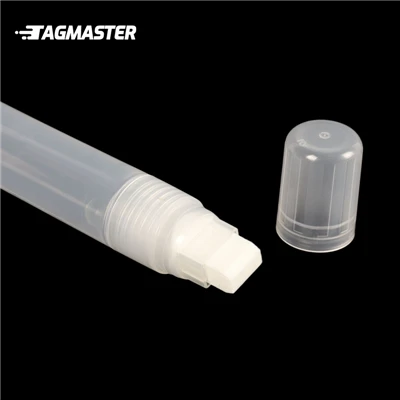
The structure of the permanent paint oil marker is very simple:
● Tip (its shape and thickness varies depending on the artist's needs)
● Body or Reservoir of paint (the type of ink may also vary)
● Cap (to prevent the paint from drying out)

Permanent paint oil markers typically come filled with oil-based or acrylic paint. The only part which sometimes causes confusion is the nib of the marker. If you simply remove the lid and begin to draw, it's normal that nothing will happen. Don't worry, it's not broken or dried up. Before being used, nibs contain no paint and require activating or opening before paint will flow from the barrel onto your art surface.
The paint within the marker needs encouraging into the nib of the pen. This can usually be done by shaking the pen – with the lid on! – and pressing the nib gently onto a hard surface or your art surface. When pressed, the nib should push inside the barrel of the pen. Both of these actions will help to encourage the paint towards the nib. It's vital to be gentle at this stage to prevent an overflow of paint onto your art surface and to ensure your pen stays clean. Be patient and check after every shake and every pump of the nib if the paint has been loaded into the nib.
Make sure to store your permanent paint oil markers with their lids replaced firmly to prevent any leakage or your nib from drying up. After being stored for a while, paint markers may need re-activating with shaking or by gently pressing the nib into the barrel again.
Some of the Most Common Tips for Permanent Paint Oil Markers
Fine and extra-fine marker tips. Extra Fine marker tips are the smallest, and they are used to create tiny sharp lines on artworks, while fine marker paint pens are ideally used to create fewer details on drawings and art pieces.
Medium tip marker paint pens. Broad tipped markers can be too wide, and it takes forever to create and fill in a design with fine tipped marker paint pens are perfect both fine details and filling in large areas.
Brush tips draw like a paintbrush and are used to either create thick and sharp highlights in drawings and paintings.
Other tip shapes include bullet tip marker paint pens that have a round bullet-like shape and the chisel tip marker, which are used to create thick and sharp highlights. Chisel tip marker paint pens are best used in card making and are ideally used to create thick and sharp highlights in calligraphy and other lettering arts.
Permanent Paint Oil Marker VS Permanent Marker, Which is the Best?
Ink Type
The main difference between a permanent marker and a permanent paint oil marker is the ink type. Permanent markers use ink that dries to a matte finish and will not smear or fade. They are also non-toxic and water-based. permanent paint oil markers have a more limited color range than permanent markers.
permanent paint oil markers have a softer tip than permanent markers and can be used on porous surfaces. However, permanent markers must be used with care because they can bleed if they come into contact with other surfaces. As with paints, permanent paint oil markers should be tested on a compatible surface before use.
Drying Period
When buying a permanent permanent paint oil marker, you should always consider the drying time. While acrylic paints are fast to dry, oil-based permanent markers need a longer time to dry. This is due to the fact that oil-based permanent paints behave differently. While they can remain opaque on dark surfaces, they tend to fade on light surfaces. This is why it’s best to make sure that the surface you’ll be painting on is well-ventilated.
permanent paint oil markers are also commonly used for painting. They can be water or oil-based. You may choose a permanent permanent paint oil marker if you’re working on a nonporous surface. They also have a quick dry time and are smudge-proof, but their drying time will vary. In some cases, you may need to use a sealer spray to ensure your permanent permanent paint oil marker is waterproof.
Safety
permanent paint oil markers and permanent markers both offer different benefits when it comes to painting. Both of these types of markers produce vivid colors and a high-quality finish on various surfaces. However, there are a few things you should keep in mind before using one over the other. Permanent markers can bleed and smear when used on porous surfaces, while permanent paint oil markers do not. In addition, they can leave indelible stains.
There are several types of permanent markers, some of which are non-toxic and washable. Others contain toxic chemicals and solvents. Some of these pens have strong odors and should be used in a well-ventilated area. Permanent markers can also be used with gloves to reduce exposure to the ink.
Finish
While both permanent paint oil markers and permanent markers provide an opaque finish, the two methods differ slightly in their ability to produce rich, vibrant colors. permanent paint oil markers also provide a more flexible finishing option because they can be layered and edited after the initial application. On the other hand, permanent markers dry quickly and are virtually smudge-free. However, unlike permanent paint oil markers, permanent ink stains and scratches are virtually impossible to remove.
Permanent markers are usually made of a plastic tube that is filled with ink and a sponge-like material that serves as the marker tip. The sponge-like material contains a colorant that gives the ink a specific color, ranging from black to blue and red. Another component of the ink is resin, a glue-like polymer that adheres to paper once the solvent evaporates.
How to Choose The Best Permanent Paint Oil Markers?
Tip type and size
One of the first decisions to make when choosing permanent paint oil markers is the tip type. Should you use a fine point or chisel tip?
Fine point markers are excellent for small, precise writing and detailed work. Chisel tips, however, are versatile and can be used for both writing and broad strokes. They're also ideal for filling larger areas.
Ink quality
Markers with high-quality ink formulas are easy to use and erase and don't leave ghosting or smudges.
Also, look for low-odor and non-toxic options. Markers with toxic ingredients could cause headaches, dizziness, and respiratory issues, especially with prolonged exposure. It's especially necessary to choose low-odor markers if you're going to use them in enclosed spaces.
Vibrant and fade-resistant
The best permanent paint oil markers have vibrant colors that resist fading. This enhances creativity and makes for a more effective presentation. With fade-resistant ink, your writing remains clear and bold over time.
Compatibility
Ensure that the permanent paint oil markers you choose are compatible with the surface of your whiteboard. Some markers may be designed for specific materials, and using the wrong markers can result in difficulties erasing or potential damage to the board surface.
Brand reputation
The reputation of the brand also indicates the quality of the markers. Read product reviews from other users to gain insights into the markers' performance, durability, and overall satisfaction.
Nontoxic permanent paint oil markers
Choosing the best permanent paint oil markers involves considering all these factors. When you do, not only will you enhance your whiteboard experience, but it will also contribute to a more effective communication channel.
Using permanent paint oil markers is easy, just follow these steps:
Shake the pen body
Before using the permanent paint oil marker, you need to shake the pen body a few times to fully mix the ink to ensure better marking effect.
Choose the right material
Permanent paint oil markers are suitable for a variety of materials, but different materials may require different pen tip types. For example, you might choose a fine nib when marking paper, but a thick nib when marking metal.
Mark
Aim the pen tip at the location to be marked and apply lightly. If you need to draw thicker lines, apply harder.
Pay attention to storage
After use, the pen cap needs to be tightly closed to prevent the ink from drying out.
How Low-Quality Permanent Paint Oil Markers Can Affect Your Health
Headaches and Dizziness
The chemical composition of low-quality permanent paint oil markers often contains a variety of chemicals that can pose health risks when inhaled or come into contact with the skin. One of them is volatile organic compounds (VOCs) such as xylene, toluene, and benzene.
These chemicals are known to be harmful and may cause adverse health effects, including headaches, dizziness, and irritation of the eyes, nose, and throat.
Poor Air Quality and Respiratory Issues
If you’re using low-quality permanent paint oil markers regularly, the release of VOCs into the air can contribute to poor indoor air quality. Prolonged exposure to these chemicals may also lead to respiratory issues, especially for individuals with pre-existing conditions such as asthma or allergies.
It’s crucial to be aware of the potential risks and take steps to mitigate them, particularly if you’re using markers in enclosed spaces like classrooms and offices.
Allergic Reaction Through Skin Contact
Direct contact with the ink of low-quality permanent paint oil markers may be absorbed through the skin which could lead to irritation, redness, and, in extreme cases, allergic reactions.
Children, whose skin may be more sensitive, are particularly vulnerable. Ensuring that markers are of high quality and utilizing proper hand hygiene after handling them is essential to minimize these risks.
Neurological Issues
While not a common occurrence, accidental ingestion of permanent paint oil marker residue can happen, especially in environments where children are present.
Low-quality markers usually contain solvents and toxic substances that can be harmful if ingested. It could cause vomiting, gastrointestinal issues, and in extreme cases, neurological effects. To prevent this, it is essential to educate individuals, especially parents and educators, about the potential dangers and encourage the use of non toxic permanent paint oil markers.
Prevention Tips
To safeguard your health and the well-being of those around you, ensure proper ventilation in classrooms, offices, and other enclosed spaces where permanent paint oil markers are frequently used.
Encourage regular handwashing after handling permanent paint oil markers to minimize the risk of skin irritation and potential chemical absorption. Also, store markers in a cool and dry place to prevent evaporation and minimize the release of VOCs.
Opt for markers from reputable brands that prioritize safety and quality. Look for markers labeled as non-toxic and low in VOCs.

There are a few things to note when using permanent paint oil markers:
Avoid over-application
Although the marking effect of permanent paint oil markers is long-lasting, over-application will cause the ink to penetrate into the back of the paper and affect the quality of the paper.
Avoid using it on unsuitable materials
Although permanent paint oil markers are suitable for various materials, using them on unsuitable materials will affect the marking effect and even damage the pen tip.
Pay attention to storage
After use, the pen cap needs to be tightly closed to prevent the ink from drying out.
Why You Shouldn’t Put Permanent Paint Oil Marker on Your Skin
It fades away naturally
Permanent paint oil markers are not meant to stay on the skin for long. In fact, they will fade away over time once they are washed regularly, and the skin pores start secreting their natural oils. This means that you do not need to use any chemical-based products to get rid of your child’s permanent marker.
It contains xylene
Xylene is a component of most permanent paint oil markers. Xylene is a benzene-like chemical that is known to cause irritation to the skin and even strip away natural oils. While the chemical is relatively safe when used properly, intentionally breathing the fumes of a marker is harmful. Luckily, some brands of permanent markers do not contain xylene.
It is toxic
Using a permanent paint oil marker can cause severe allergic reactions in some people. The permanent ink in permanent markers is often made from chemicals known as organic solvents. These chemicals can lead to an allergic reaction, which gets worse over time. For this reason, it’s best to stay away from permanent markers, even if you’re not allergic to them.
It causes skin irritation
Permanent paint oil markers can be very irritating to the skin. They can also cause allergies if used near the eyes or nose. To remove permanent markers from your skin, you should wash it off with water and mild soap. If that does not work, you should seek medical help. You can also use rubbing alcohol to clean the affected area. However, you must avoid putting any more irritants on your skin.
It is toxic to breathe in the fumes
While permanent markers such as the brand can be harmless when used properly, breathing in the fumes can be harmful. The ink in these markers is made of chemicals such as xylene, toluene, and urethane resin. These chemicals are toxic when breathed in and are best avoided.
It is not a good idea to use permanent markers on the skin
Permanent paint oil markers contain chemicals called xylene, which can be very harmful to your skin. These chemicals can irritate the skin and strip away natural oils. Some brands of permanent markers do not contain xylene.
Keeping your permanent paint oil markers in top-notch condition is easy with these straightforward storage tips.
Keeping the cap on
Always cap your tip pens when not in use. This simple step prevents drying and maintains ink freshness.
Horizontal storage
Store your pens horizontally to distribute the ink evenly. This helps prevent one side from drying out faster than the other.
Following the ‘Cool and Dry’ rule
Choose a cool, dry storage spot away from direct sunlight. Heat and sunlight can impact the ink quality.
Using pen organizers
Consider a pen organizer or case to keep your pens neatly arranged and easily accessible.
Maintaining the room temperature
Maintain a moderate room temperature for your pens. Extreme temperatures can affect ink consistency.
Separating by pen color
If you have a variety of colors, consider storing pens by color family. This makes finding the right shade a breeze.
Consistent maintenance
Regularly check and clean the pen caps to avoid any dried ink that may compromise a good seal.
Certifications


Our Factory
Shenzhen ample Technology Co Ltd is in Shenzhen Guangdong province, where It is located in South China bordering on Hong Kong. It is one of China's first special economic zones. It has an economy featuring high-tech industries. At present, the company has more than 100 employees, the factory area of more than 2000 square meters. Produce Machines more than 15sets,Our Company to provide professional services for the purpose, regardless of the production process, quality, customer sales and after-sales service, etc.


Ultimate FAQ Guide to Permanent Paint Oil Marker
Professional as one of leading permanent paint oil marker manufacturers and suppliers in China, we also support customized service. Please rest assured to buy permanent paint oil marker from our factory.
oil marker for crafts, high quality drawing marker, professional paint pen-
![8MM Capsule Refillable Empty Paint Marker]() 8MM Capsule Refillable Empty Paint MarkerPocket-sized 10ml refillable empty paint marker with an 8mm round bullet nib. Features a translucent capsule barrel,read more
8MM Capsule Refillable Empty Paint MarkerPocket-sized 10ml refillable empty paint marker with an 8mm round bullet nib. Features a translucent capsule barrel,read more -
![50ml Empty Squeeze Bottle With Sponge Tip]() 50ml Empty Squeeze Bottle With Sponge Tip50ml empty squeeze bottle with sponge tip for graffiti mop markers, DIY daubers, painting and ink refilling.read more
50ml Empty Squeeze Bottle With Sponge Tip50ml empty squeeze bottle with sponge tip for graffiti mop markers, DIY daubers, painting and ink refilling.read more -
![Squeeze Bottle 50ml 18mm Empty Ink Bottle]() Squeeze Bottle 50ml 18mm Empty Ink Bottle50ml wide-base squeeze paint bottle No.2 with 18mm dabber tip. Features a stable grip design in soft & hard bodyread more
Squeeze Bottle 50ml 18mm Empty Ink Bottle50ml wide-base squeeze paint bottle No.2 with 18mm dabber tip. Features a stable grip design in soft & hard bodyread more -
![No.1 Empty Squeeze Bottle 50ml 18mm]() No.1 Empty Squeeze Bottle 50ml 18mmThe No.1 Squeeze Bottle is designed for users who need a durable refill bottle for inks, paints and other liquidread more
No.1 Empty Squeeze Bottle 50ml 18mmThe No.1 Squeeze Bottle is designed for users who need a durable refill bottle for inks, paints and other liquidread more -
![8mm Acrylic Tip Empty Marker Capsule Pen AP-D1908 10ml Refillable Marker]() 8mm Acrylic Tip Empty Marker Capsule Pen AP-D1908 10ml Refillable MarkerThe AP-D1908 8mm Acrylic Tip Empty Marker Capsule Pen is a refillable marker system designed for graffiti,read more
8mm Acrylic Tip Empty Marker Capsule Pen AP-D1908 10ml Refillable MarkerThe AP-D1908 8mm Acrylic Tip Empty Marker Capsule Pen is a refillable marker system designed for graffiti,read more -
![10mm Refillable Marker Barrel White Chisel Felt Nylon Series]() 10mm Refillable Marker Barrel White Chisel Felt Nylon SeriesThe 10mm Refillable Marker Barrel White Black Series is designed for medium-width marker applications that requireread more
10mm Refillable Marker Barrel White Chisel Felt Nylon SeriesThe 10mm Refillable Marker Barrel White Black Series is designed for medium-width marker applications that requireread more